
Find a San Juan County Property Owner
The address is a starting point. It is not the final identifier. San Juan County's public parcel layer ties a physical location to parcel and account numbers, two owner-name fields, mailing address parts, a legal description, and Recorder references. With the parcel key in hand, compare the roll against the newest conveyance. That answers who is named on the record. It also beats treating a single search result as a complete statement of title.
- Search the physical address or map location and write down the parcel number.
- Read `NAME1` and `NAME2` and keep the owner address apart from the situs.
- Search the Recorder as grantee and open the latest deed or transfer instrument.
- Compare the legal description and recording reference; check entity records only if an organization is named.
Sometimes the roll and the deed disagree. The newest recorded conveyance is the stronger current-transfer clue. San Juan County publishes no fixed deed-to-roll delay, so avoid assuming a set update period.
San Juan County Owner Record Sources
Each source covers a different slice of ownership. The assessor's parcel layer is the quickest address-to-name route. The Recorder index lists recorded transfers. The Treasurer handles tax payment status rather than ownership, and GIS geometry helps confirm you have the intended parcel rather than another property held under the same owner name.
| Source | Owner information | Best use |
|---|---|---|
| County parcel / GIS layer | `NAME1`, `NAME2`, situs, mailing-style fields | Identify the parcel from a location |
| Assessor | Owner-of-record and valuation context | Read the current administrative roll |
| Recorder Public Search | Grantor, grantee, instrument, legal description | Confirm the recorded conveyance |
| Utah entity search | Registered entity name and entity type | Clarify an LLC or corporation name |
| Treasurer | Tax account and payment answer | Answer a tax question only |
The roll names an owner of record. That person may not live there. Public parcel records never establish occupancy, and the owner's mailing address can sit somewhere else entirely.
San Juan County Owner Fields
The layer's owner fields are `NAME1` and `NAME2`. Mailing details live in `ADDRESS` and `CITYSTATEZIP`. Situs sits in separate fields: `LocationAddress`, `LocationCity`, and `LocationZip`. The layer also carries `PARCELNO`, `PARCELNB`, `ACCOUNTNO`, `RECEPTNO`, `BOOK`, `PAGE`, `LEGAL1`, and `LEGAL2`. Together these fields let you tie a person or entity to the tract and to a recorded instrument reference.
This schema is a GIS inventory. It does not guarantee every Assessor screen shows the same data. The county's text page offers no direct owner-search URL. It states no roll-refresh interval either. The map service lists a September 2026 update. The state SGID basic parcel layer is dated July 2025, with LIR from 2024, so those statewide downloads may trail the latest county service changes.
The current owner question gets fuller treatment on the San Juan County current owner record page. The owner fields here come from the county's Parcel Data with Child feature layer.
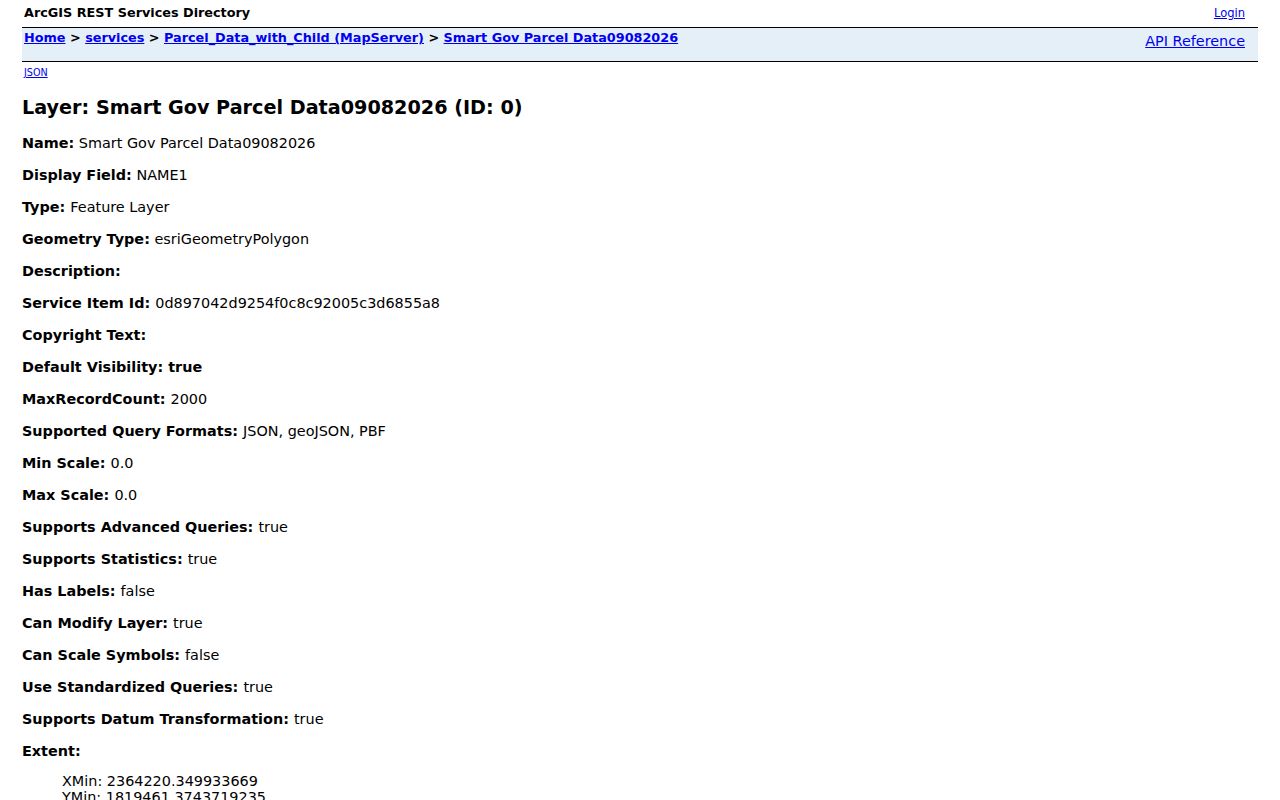
Search the Recorder by parcel number, not name alone.
Confirming a San Juan County Deed
The latest deed can show whether the Assessor display reflects a recent sale. Search the current owner as grantee. Compare grantor and grantee against the roll. Match the legal description too. A street address may be missing from a deed index, especially for rural tracts or older townsite lots. Reception number, book, volume, and page fields help locate the instrument image.
The Recorder's quick search handles party, subdivision, document type, document number, and date range. Advanced Search splits out Party Names, Grantor, Grantee, legal description, book/page, and OCR text. Index-only mode checks words one by one. OCR mode treats multiple words as a phrase. For deed research itself, see the San Juan County deed index instructions.
San Juan County LLC and Trust Owners
An entity in `NAME1` or `NAME2` changes the search. Look up the exact legal name in Utah's Registered Entities Search. The portal accepts partial names and an entity-type filter. A registered entity record can distinguish an LLC from a similarly named person or business, but it cannot prove the entity owns the parcel. Only the Recorder deed connects the name to the legal description.
A trust may be indexed under its trust name, a trustee, or a related party. Estates may name a personal representative. Search variants. Compare instruments, not web results. Utah's UCC/CFS system covers personal-property security filings; it does not replace the County Recorder's real-property lien search. For a business name, use the official Utah registered-entity lookup.
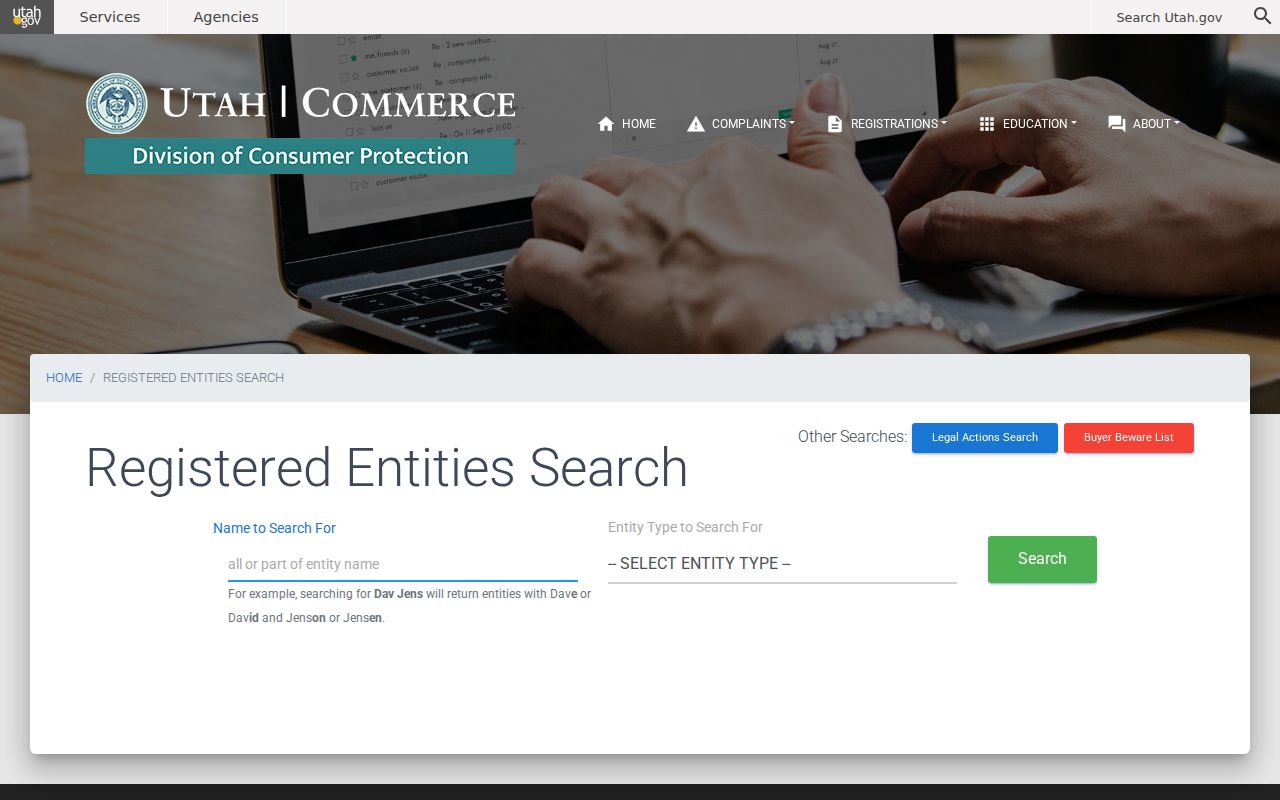
Entity results are context; the county deed decides.
San Juan County Mailing and Situs
The situs is where the parcel sits. The mailing address is where the county sends notices and correspondence. That gap matters in San Juan County. Rural routes, tribal and public-land settings, municipal edges, and PO boxes all blur the lines here. A parcel can carry a Monticello mailing city while sitting outside the city. A postal ZIP can straddle more than one local boundary. Cross-check the GIS LocationCity field and the parcel geometry against the owner-address fields and the deed description before settling anything.
A mailing address is a lawful clue for property matters, nothing more. It does not prove the owner lives on site. Nor does it prove other parcels there. Route a narrow property communication to it. But skip any guesswork about occupancy or personal details. When an address will not resolve, fall back on an older parcel number or the legal description instead.
San Juan County Owner Data Limits
Utah's public-record rules open many county records to the public. Title, encumbrances, restrictions, and tax status all give notice through these filings. Plenty of other information stays private or protected. Voter records sit under a separate set of rules. They answer different questions. Public voter lists can include addresses, an age range, party affiliation, districts, and vote history. But full birth dates, contact details, ID numbers, signatures, and At-Risk records stay protected or withheld. Voter data is not a substitute for a property record.
A protected address or personal identifier may turn up in a source. Ask the custodian which redaction or confidentiality process applies. Keep any public-record search limited to lawful property, title, tax, boundary, or civic research. The Utah voter registration and privacy portal covers the separate limits on voter data.
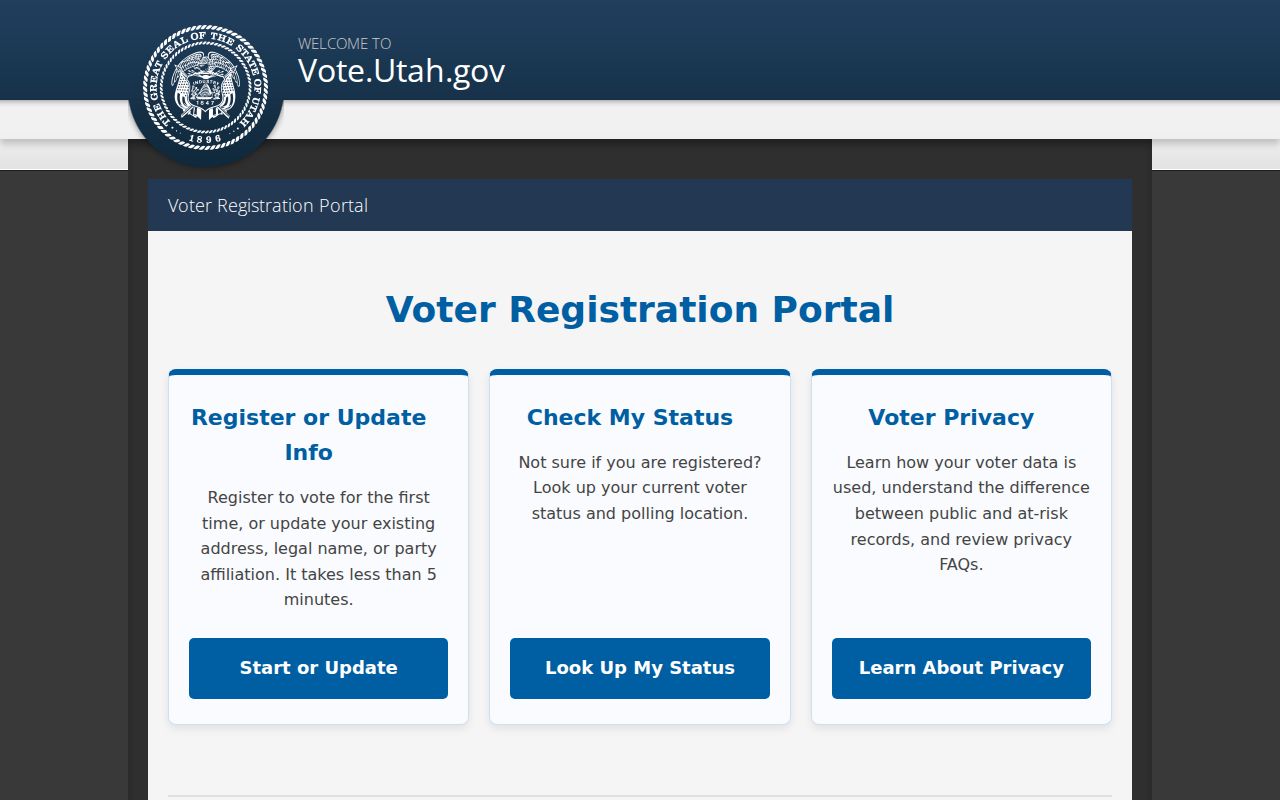
Ownership must still be confirmed through the San Juan County parcel and deed records, not this state privacy page.
San Juan County Property Alert
The Recorder's search environment shows a Property Alert link. What it does not publish are the signup terms. Nothing there states whether enrollment is free. It also omits which document types trigger a notice, how many parcels one account can monitor, or what details the signup collects. Check the official county Recorder page and alert portal before relying on any notification service. An alert may flag a new filing. It cannot prevent a deed or confirm that a filing is valid.
For a real ownership concern, write down the parcel. Add the instrument number and the recording date. Then contact the Recorder through its published channel. Treat an alert as a prompt to pull the record. It is no substitute for the latest deed or a title search. Review the Recorder Property Alert page and confirm the live signup terms.
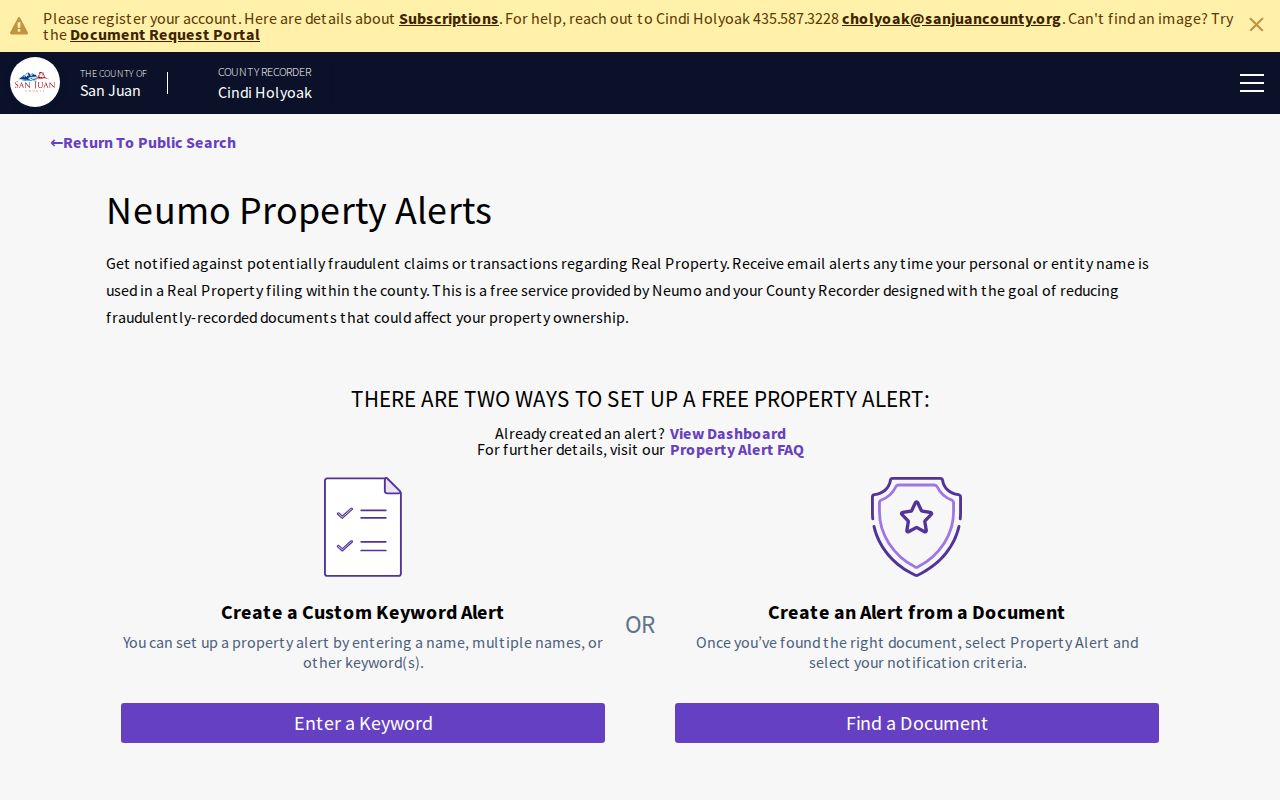
Use the alert for notice only; verify the county instrument.
Limits of a San Juan County Owner Search
"Who owns" can mean three different things. It might be the name on the tax roll, the party named in the latest recorded deed, or the person who actually uses the property. Those are rarely the same question. The record may name an LLC, trust, or estate. The assessor may lag behind a recently recorded transfer, so compare official sources and contact the custodian when the result matters.
Use records lawfully. San Juan County owner information is for property research and due diligence. Do not use records to watch, intimidate, harass, or harm any person.