
San Juan County Property Tax Records
San Juan County splits tax information across two offices. The Assessor sets the annual fair-market estimate. It also applies the primary-residence exemption when a property qualifies. The Treasurer bills, collects, and reconciles the taxes that local entities levy. Each record answers a different question. A value field cannot tell you whether an account is paid. A Treasurer balance cannot explain how the assessed value was set.
| Record field | What it can show | Where to ask |
|---|---|---|
| Fair-market estimate | Value as of the tax year’s January 1 date | County Assessor |
| Taxable value | Value after an applicable exemption | Assessor and Utah Tax Commission guidance |
| Property characteristics | Details used in the assessment roll | Assessor |
| Tax amount and payment status | Bill, payment, balance, or delinquency answer | County Treasurer |
| Tax area / taxing entities | Collection district context | Parcel layer and Treasurer |
The county publishes no searchable historic bill interface and no public delinquency list. Ask the custodian for the tax year and the parcel or account number instead of assuming every field sits on one screen.
Market and Taxable Value
Utah assesses locally taxed property at full market value first. A qualifying primary residence then gets a 45 percent exemption. That leaves 55 percent of market value taxable. The state ties the exemption to a 183-day use condition. Most other property classes are taxed on 100 percent of market value. These percentages explain the value side only. Local taxing-entity rates and account details still drive the final tax bill.
A lower taxable value does not mean the Assessor thinks the home would sell for less. Keep the market estimate, taxable amount, exemption, and tax due as separate notes. If the assessor record does not show why an exemption applies, ask the Assessor. The Treasurer handles bill and payment questions but never sets the assessed value.
Utah's official primary-residence exemption page describes the 45 percent reduction and the 183-day condition.
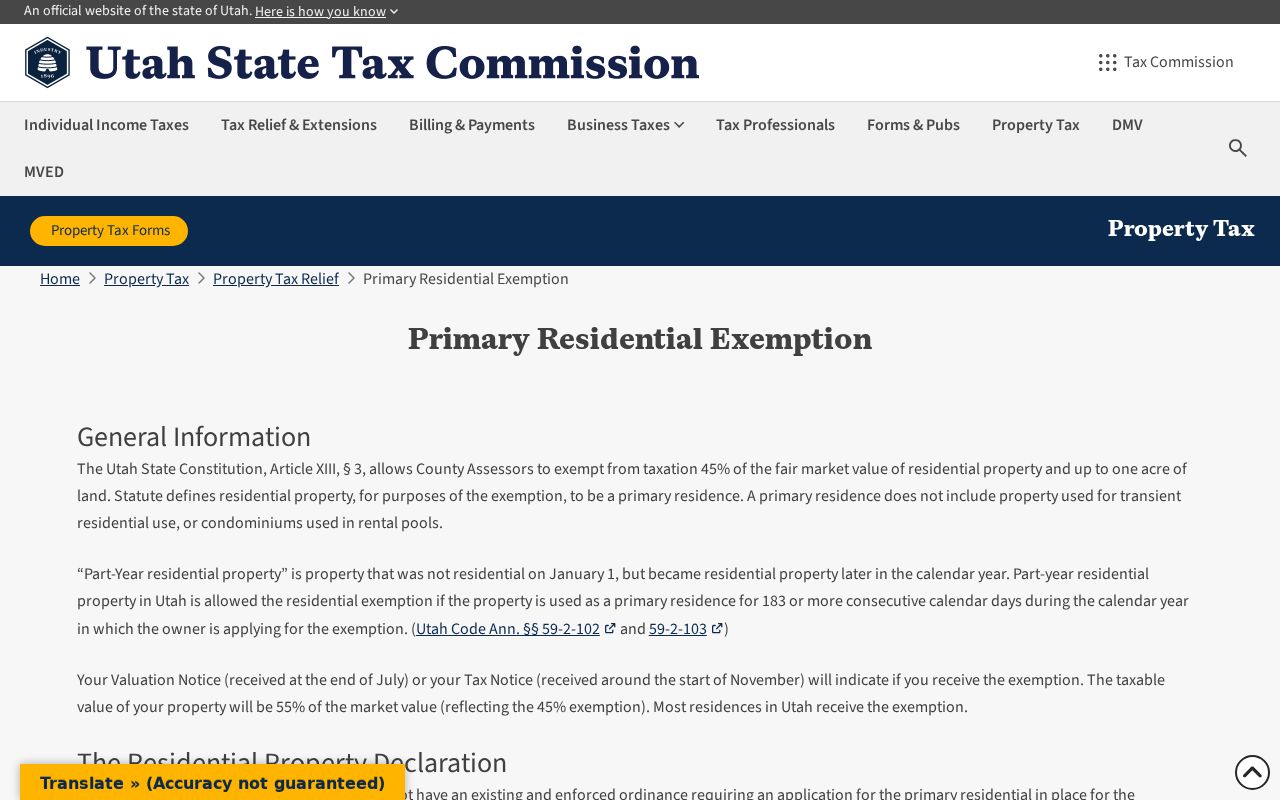
Use the state rule to understand the taxable portion, then verify the parcel's actual classification with the County Assessor.
San Juan County Assessment Cycle
Each January 1, the Assessor sets a fair market value for every parcel. The values come from real sales inside the county. Utah law requires a full review of property characteristics at least once every five years. Values move up or down each year in between. Sales from outside San Juan County rarely serve as comparisons. A remote parcel can deserve more context than a statewide average offers. So can a home in a named subdivision, or land with odd access or improvements.
A Notice of Valuation arrives in July. The owner of record can review the assessment. This comes before the tax roll is final. If the details or the value look off, start with the Assessor. The office can walk through the parcel characteristics and explain the roll. It does not set the tax rate. Treat the notice as an opening document for review. It is not a promise of what the property would bring at sale.
The San Juan County Assessor page carries the annual update schedule. It also holds the five-year review details.
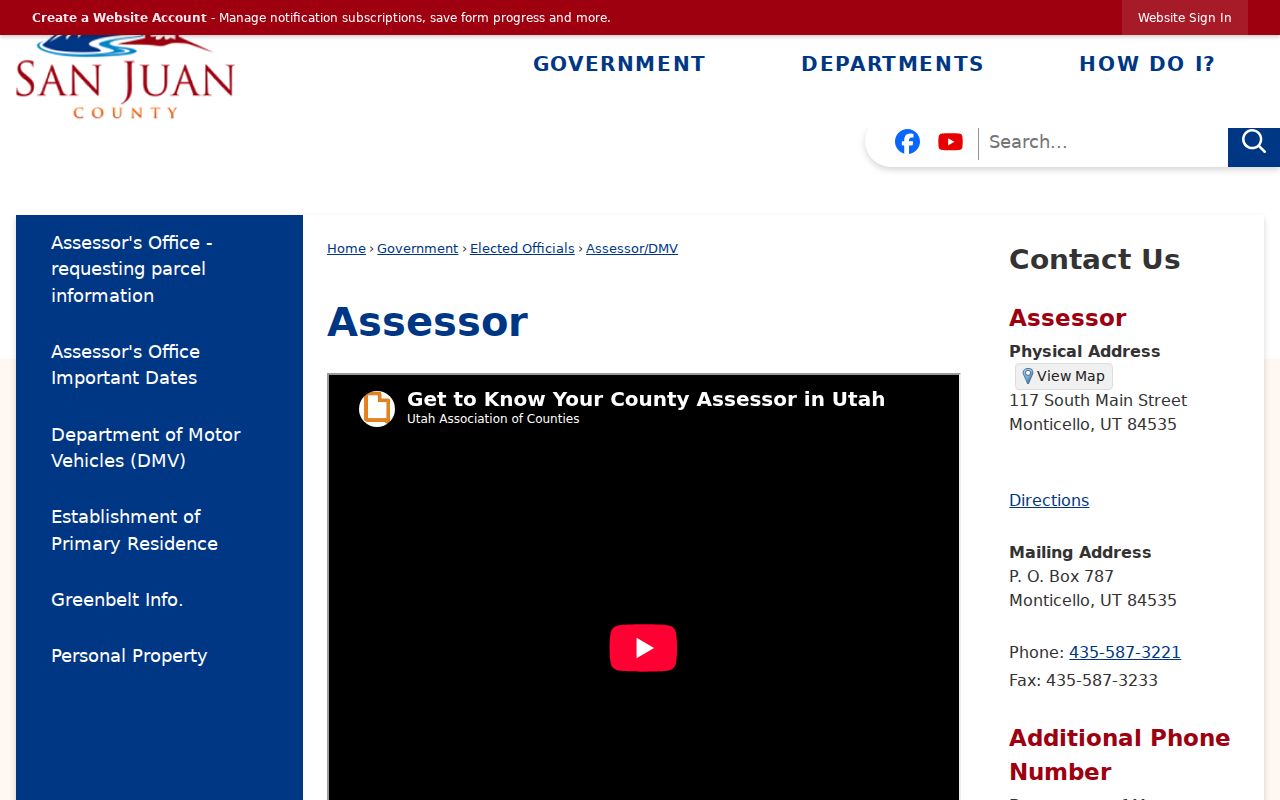
Record the tax year and valuation date when comparing one notice with another.
San Juan County Valuation Notice
The July notice opens the local review path. The property description may need attention. Improvement details or the fair-market estimate can too. Contact the Assessor first in that case. Identify the parcel. Appeals go to the County Auditor by September 15 if the issue stays unresolved. The county publishes no single portal form or detailed evidence checklist. Confirm the current filing method and required materials with the county before sending an appeal.
Appeal date. A San Juan County assessment appeal must be filed with the County Auditor by September 15. Ask the Assessor first, then confirm the current submission steps with the county.
Keep the notice, the tax year, the parcel number, and any county correspondence together. A July notice and a deed can show different owner names. The deed may reflect a recent transfer that has not yet flowed through the annual roll.
San Juan County Assessor and Treasurer
The Assessor and the Treasurer share the courthouse area in Monticello. Their records are distinct, though. The Assessor explains fair-market value, parcel characteristics, exemptions, and the annual notice. The Treasurer collects and reconciles payments for the taxing entities. Its public page carries a payment link but no text-search fields or historic delinquency list. An assessor screen is never proof a bill was paid.
For a current tax amount, payment history, delinquency, or tax-sale question, use the Treasurer's payment link. You can also call 435-587-3237 extension 2. Mail goes to P.O. Box 817, 117 South Main Street, Monticello. The Assessor sits at 117 South Main, P.O. Box 787, reachable at 435-587-3221. Ask the office that holds the record. The office whose nearby screen shows the parcel may not be the right one.
See the county Treasurer page for its collection role and payment path.
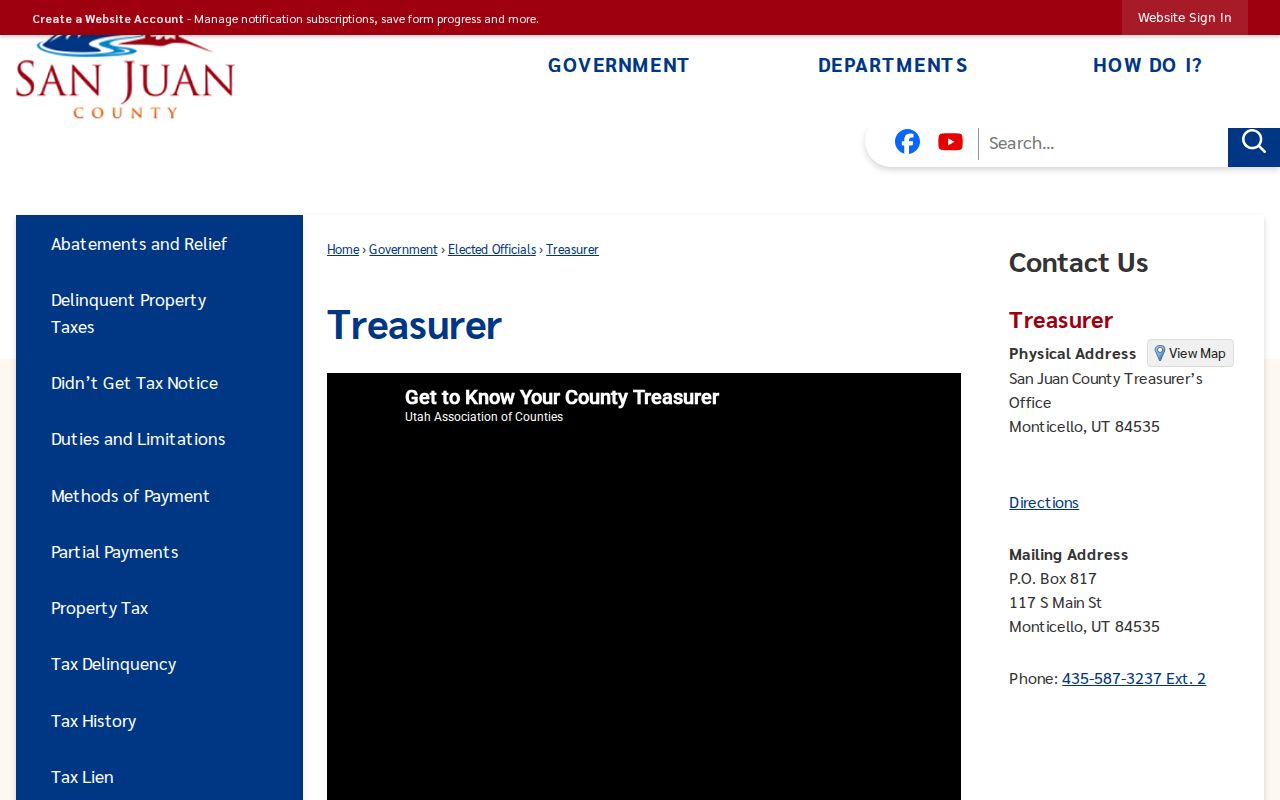
The Treasurer tracks the bill; the Assessor sets the value behind it. Your parcel number links both offices.
Tax Areas and Local Rates
Every parcel carries a tax area. It lists the taxing districts on the parcel. The field sits in San Juan County's parcel service, and it names the entities that levy, though it is never the bill total. The Treasurer collects and distributes taxes for every district that levies in the county.
Approved rates come from the state, which publishes each year's rates and budgets in a statewide table. Compare parcels carefully. Match the parcel number, tax year, exemption class, and approved rate period before drawing any conclusion. Rates move with budgets. When a taxing district changes its budget, the tax roll changes too, yet a statewide table cannot reveal an account's payment status, delinquency, penalty, or parcel-specific exemption. Take those questions to the Treasurer or Assessor. Balance and payment-history requests go there too. Never estimate a tax due by multiplying a map value by a rate without confirming the account and its tax area.
For annual rate context, consult Utah's approved property-tax rates and budgets.
San Juan County Tax Payments
San Juan County posts no delinquent-tax list. Nor does it offer an online tax-sale archive or a searchable tax-bill index. The Treasurer's payment page covers current accounts. Older years and exact account details may need a request. Give the parcel number or account number, the tax year, and the item you want. Ask about fees first. A publication or copy charge may apply to a tax-sale list.
Tax liens rarely live in one office. A tax-sale question can involve recorded instruments and a court case. Search the Recorder for notices, liens, and releases. Utah Courts Xchange gives a public case summary where litigation exists. A map identifies the legal parcel. But it cannot show whether a sale closed or a redemption period ended.
For records outside the payment path, file a written request under Utah's Government Records Access and Management Act. Name the agency. Describe the parcel, tax year, and record with reasonable specificity.
Request San Juan County Tax Records
GRAMA covers requests when a county page does not expose the account field you need. A written request must identify you and describe the record with reasonable care. The standard response deadline is ten business days. An expedited public-benefit request gets five business days. The custodian may charge reasonable actual costs. A qualifying fee-waiver request can lower or remove them. The county form has fields for the agency and a description of the record. It also asks for a date or location, your response preference, and the fee-waiver options.
Keep the ask narrow. Name the tax year and the parcel or account number. Say whether you want a bill, a payment history, an exemption decision, or a delinquency status. If the reply points you to another custodian, send that office the same precise description. The public-access rule still respects statutory privacy limits. It cannot promise that every year sits in a searchable online format.
San Juan County Tax Record Limits
Sale price is not the taxable value. Neither matches the tax due. A change in the tax roll is not proof of a deed transfer, and a clean payment balance does not clear other liens. For the difference between assessed and market value, see the San Juan County property value explanation.
Keep the records separate. The Assessor values property, taxing entities set rates, and the Treasurer collects the bill. Confirm each figure with its custodian.