
Former Owners of San Juan County Land
Tracing past ownership in San Juan County starts with the most recent deed. Then it works backward from there. Each grantee you meet becomes a grantor in an earlier transfer. San Juan County property records held in physical form reach back to the late 1800s. The online index publishes no exact starting year. A blank online result does not close the case. Older transfers may still sit in the Recorder's historical indexes or archive catalogs. To search San Juan County property records by address, parcel, or name, you can use the public index. For the earliest years, turn to books and plats.
| Source | Coverage clue | Where held | What it helps trace |
|---|---|---|---|
| Recorder Public Search | Online start year not published | publicsearch.us | Recent parties, dates, and instrument references |
| Official land records | Physical collection reaches late 1800s to present | Recorder / permanent Archives series | Recorded conveyances and encumbrances |
| Abstract books and indexes | Years not stated in catalog capture | Recorder / Utah Archives | Chain by tract or geographic location |
| Fee and entry books | Series described by Archives | Recorder / Utah Archives | Names, entry, instrument type, book/page |
| Survey and plat indexes | Dated municipal and subdivision entries | County Surveyor | Lot, block, annexation, and replat context |
The newest recorded grantee is your starting point. That name anchors the whole chain. For years before the online index, ask the Recorder which older index or book applies. Never assume every year has been digitized.
Tracing the San Juan County Deed Chain
Deed-chain research runs in reverse. A grantor gives up an interest. A grantee takes it. Find the latest deed, note the grantor's name and the legal description, then hunt that grantor as an earlier grantee. Keep repeating the step until the name stops appearing online. Track each transfer in a table with date, grantor, grantee, instrument type, reception number, and book and page.
- Open the most recent conveyance for the parcel and confirm its legal description.
- Search the grantor as grantee and find the earlier acquisition of the same land.
- Repeat with each earlier grantor, checking lot, block, tract, or township/range at every step.
- When a name search reaches the online edge, ask for the earlier book or abstract index.
- Grantor
- The party transferring the recorded interest.
- Grantee
- The party receiving the interest.
- Chain of title
- The connected sequence of transfers for the tract.
- Legal description
- The land description that can remain useful when the street address changes.
For searching and copying a single deed, the San Juan County deed records page covers that process.
San Juan County Online Index Edge
The Recorder page describes a historical collection from the late 1800s to the present. It names no exact start for the online index. An early grantor or grantee may be missing from the portal. That is not evidence of a gap. Switch from the screen to the counter instead. Ask how the official records, mortgage indexes, and abstract books are arranged. Staff can point you in the right direction. They cannot run the full search for you. Come prepared. Bring the current parcel number, every known prior owner name, present and historic situs clues, subdivision or lot and block details, township and range if known, and any reception or book and page references already gathered. Request a specific book or index run rather than a full title search. The county Recorder page publishes its historical-coverage statement.
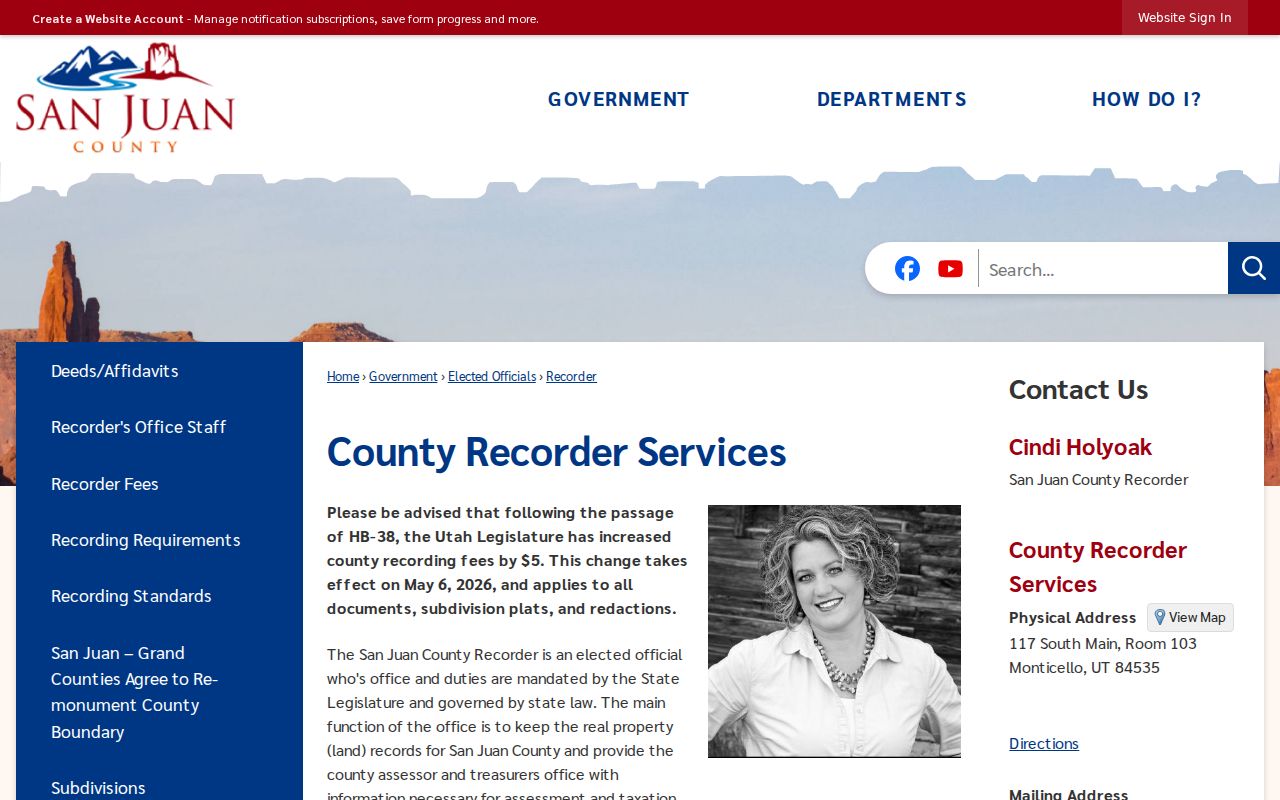
The late-1800s statement covers the physical collection only, and it never names the portal's digitization cutoff.
San Juan County 1949 Record Format
Utah Archives notes that San Juan official records began being registered together in 1949. They were also kept in separate volumes that year. That year is a clue about record structure, not the beginning of ownership history. Archives also identifies abstract books and indexes. These trace a true chain of title and encumbrances by geographic location. Fee and entry books preserve recording details. These include names, entry number, book and page, and instrument type. Series descriptions tell you what to request even without a scan. The catalog lists official records and permanent grantor mortgage indexes. It also lists abstract books and indexes, and fee and entry books. Ask the Recorder whether a given volume has been scanned, microfilmed, or still sits at the counter. No courthouse fire or records loss appears in the county's own accounts. Do not assume one. Search the state's San Juan Recorder series catalog by record group and series description. Note: a finding aid locates a record group, but it does not place every book online.
San Juan County Legal Description Changes
Names are not the only thread to follow. A replat, lot split, annexation, or parent and child parcel update can change the parcel number. The current number may not match an older deed. Search by subdivision name and legal description as well as by parties. The county Surveyor files records of survey by township and range. Subdivision plats are filed by region. Townsite plats are organized by municipality. Annexation plats run chronologically. Blanding shows how this plays out. Pioneer Estates Plat A dates to 1976. Tait dates to 2018 with a 2022 amendment, and newer entries run through 2024. Blanding annexation records include 1959 and 1960 references plus later items through 2024. These are mapping events, not sales. Compare the recorded plat against the deed before carrying any lot number backward in time.
San Juan County Probate Transfers
A death can break a clean chain of title in San Juan County. When it does, search the Recorder for probate instruments. These include an executor deed, administrator deed, beneficiary deed, or a transfer signed by a personal representative. Estate names and affidavits also show up in the deed records. The Utah Courts Xchange search displays probate and civil dockets by party. That includes appointment orders and final distributions. Some court files contain restricted portions. Not every case image is viewable online.
A death certificate is a different animal entirely. It is a vital record with eligibility limits, not a property record. Utah opens death records to the public after 50 years. Current certificates require proof of identity and entitlement. For land ownership questions, rely on the recorded deed and the probate order instead. Those instruments show how a parcel actually passed. Their recording references anchor the chain in San Juan County property records.
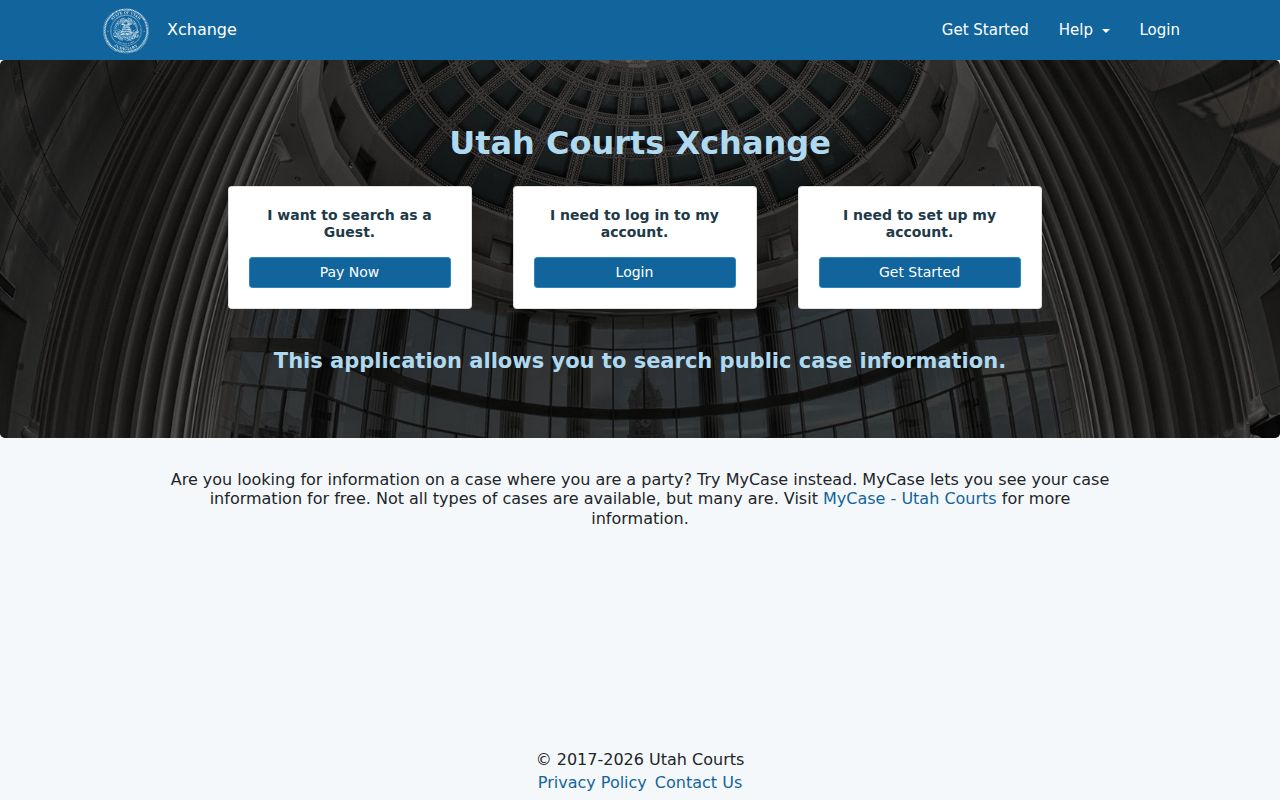
Treat a case result as a pointer. It leads to the court file and any instrument later recorded with the County Recorder. For official vital-record ordering, the Utah state order page explains eligibility and warns about third-party vendors.
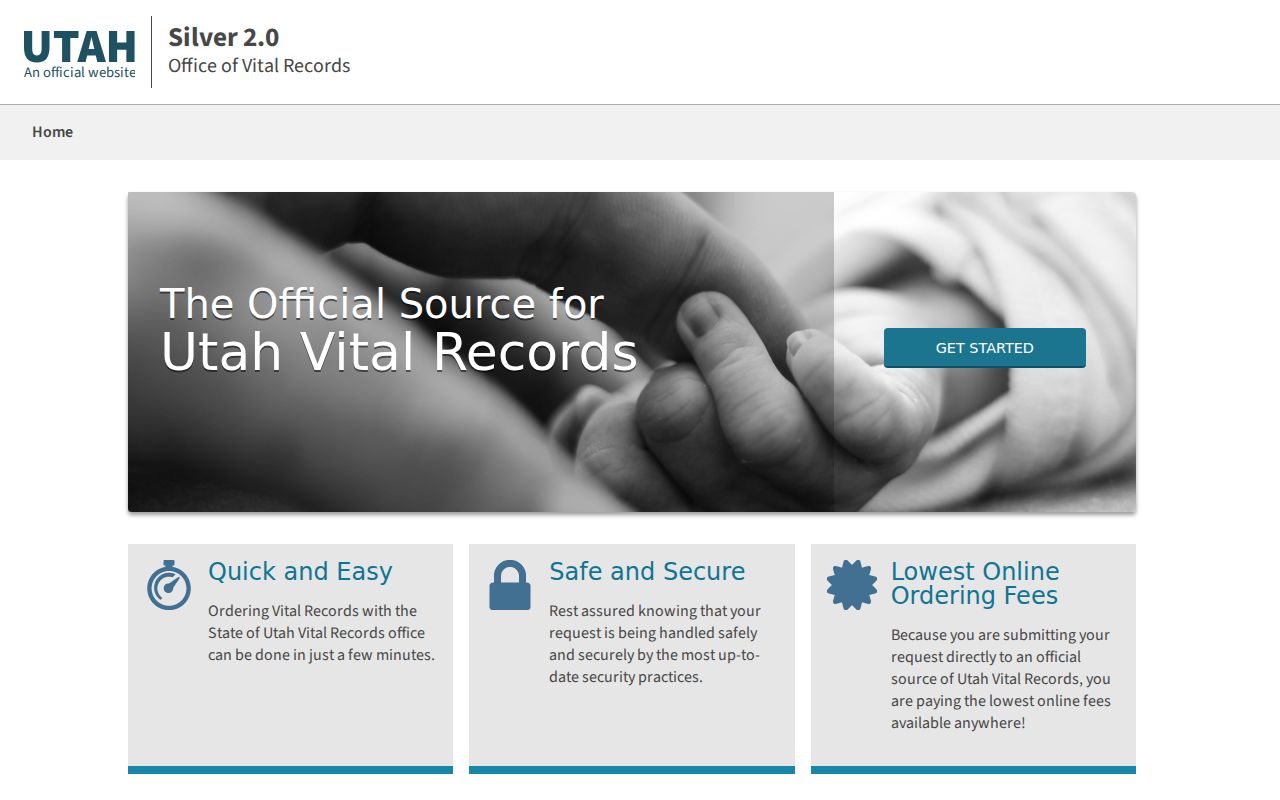
A death-record clue can confirm identity or timing within those access rules. The probate file and the recorded instrument remain the property records that matter.
San Juan County Archive Search
When the San Juan County index runs dry, older names still surface. State and local finding aids carry much of the older material. Utah Archives lists county agency series and a birth-register index for the county. FamilySearch catalogs, the Utah Online Public Library, the Marriott Library, BYU Special Collections, and county library branches can add names. These same sources supply historical addresses and place clues. San Juan newspaper and city-directory holdings vary by location. Call a library before planning a visit around a specific title or date.
Build a worksheet before searching. Include current and earlier owner names, parcel and account numbers, site and mailing addresses, lot and block or township and range, known dates, and every recording reference. Work deeds backward first. When names stop lining up, switch to the geographic index. An obituary or census entry can suggest who to search next. Neither one is a title record, so confirm every step against the deed. The San Juan County birth-register index is an identity lead only. It is not evidence of a land transfer.
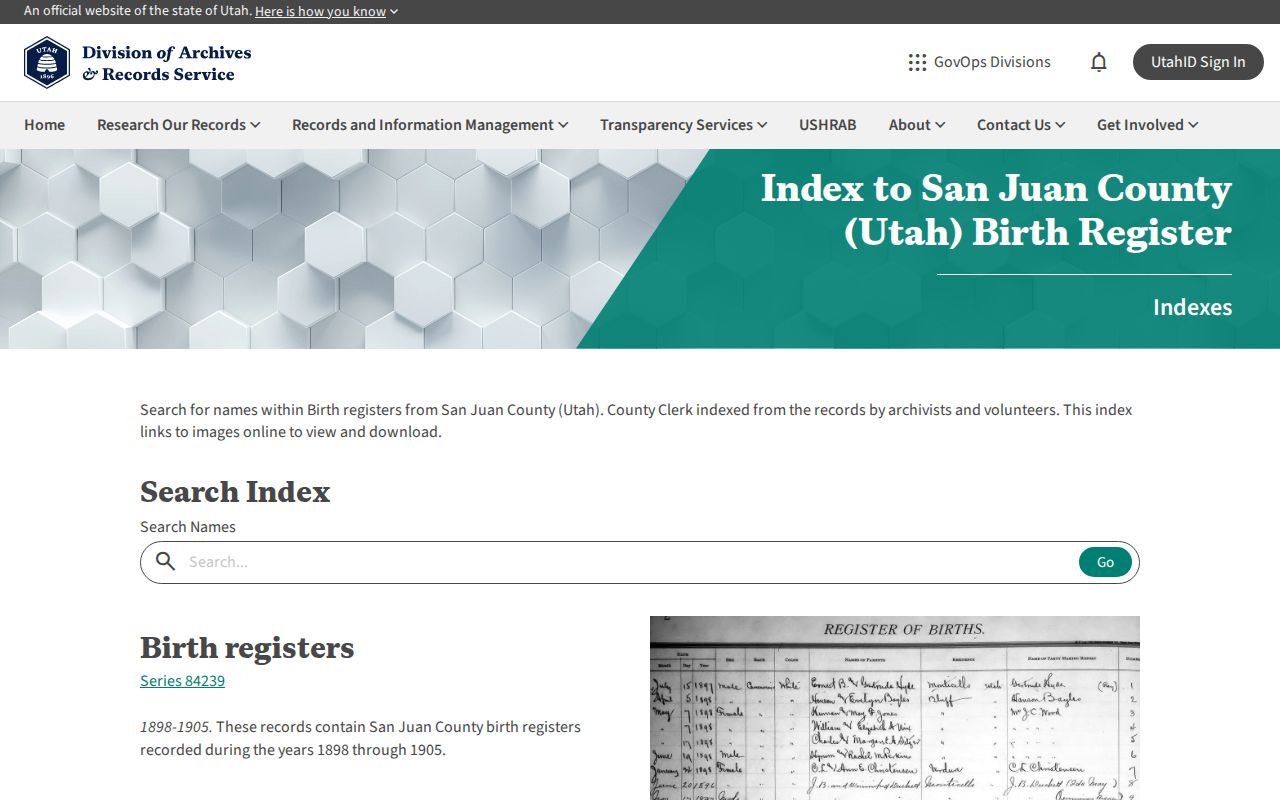
The index may suggest names or dates worth checking against deeds and probate records. It does not establish parcel ownership. For settlement background on the area, the county history profile at the Utah Online Public Library is a useful read.
Historical context can surface a prior name or place reference. The land transfer itself still needs a deed or court record to stand.
Getting Older San Juan County Deeds
Online access is only one channel for older San Juan County deeds. The Recorder counter in Monticello can orient a historical search. Document-specific requests go through the county's Property Document/Information Request Portal. Utah Archives can identify permanent record series. Area libraries hold local history and genealogy material. Phone staff can give limited recording information. They will not recite metes-and-bounds dimensions. When possible, request an image or copy by instrument reference.
Payment is flexible. Staff accept cash, check, and electronic payment for requests. The electronic route starts with a phone call for a total, then a payment link. The Recorder publishes no exact copy fee online. The 2026 five-dollar increase in recording fees is not a copy schedule. Check current charges before ordering.
San Juan County Former Owner Limits
Former-owner research supports house history, genealogy, title review, and property due diligence. It does not prove a living person occupies a site. Nor does it prove anyone should be contacted. Tie every name to a recorded transfer and legal description. For today's ownership question, compare the latest deed with the Assessor's current administrative roll.
Use the chain lawfully. San Juan County public land records are for legitimate property and historical research. Do not use a prior owner’s record to follow, threaten, harass, or harm anyone.